Y-TEM Lab Yonsei Time-to-Event Modeling

Yonsei Time-to-Event Modeling Lab · 연세대학교

Learning when events happen — even when event times are partially observed.

Y-TEM Lab develops statistical and machine-learning methods for survival and event-time data, with a focus on prediction, uncertainty quantification, censoring, coarsened observation, and complex event histories.

Survival analysis Statistical learning Uncertainty quantification
Now recruiting PhD, MS, and undergraduate researchers

Research

Questions we work on

Our work is organized around a common problem: learning from event-time data when key information is censored, coarsened, recurrent, or high-dimensional. We develop new methodology while staying close to scientific applications in medicine, public health, social policy, and genomics.

01

Survival prediction & statistical learning

How can we make reliable predictions when event times are censored or only partially observed?

Conformal inference for survival prediction

Distribution-free prediction sets and calibrated uncertainty for complex survival data, including settings where calibration outcomes are partially observed.

Deep Gaussian process AFT models

Flexible, individualized predictive distributions for time-to-event outcomes under an accelerated-failure-time structure.

Applications · ADNI · TCGA

Semi-supervised learning for survival data

Leveraging partially labeled and unlabeled data to improve estimation and prediction when survival outcomes are incompletely observed.
02

Inference with censored & coarsened data

How should statistical inference change when the variable we need is itself incompletely observed?

Regression with right-censored covariates

Estimation and valid inference when a predictor — rather than the outcome — is right-censored or otherwise coarsened.

Causal inference with coarsened treatment timing

Estimating treatment and policy effects when treatment timing or adoption time is observed only through sparse intervals.

03

Event-history & causal methods

How can complex event histories reveal mechanisms, trajectories, and policy effects?

Policy effects on recurrent-event rates

Methods for evaluating policy changes when outcomes can recur and policy adoption varies across units and time.

Application · NCANDS Child maltreatment

Mediation for survival outcomes

Decomposing survival differences into direct and indirect pathways under censoring.

Application · K-CURE Breast cancer cohort

04

High-dimensional biomedical learning

How can we find compact, interpretable structure in high-dimensional biomedical data?

Gene-panel selection in high dimensions

Selecting small, interpretable gene panels for disease and survival outcomes when candidate features vastly exceed the sample size.

Applications · Alzheimer's disease · cancer genomics

Combinatorial optimization for variable selection

Studying subset-selection solutions produced by mathematical optimization, simulated annealing, and quantum annealing, with emphasis on near-optimal solution landscapes and scientific interpretability.

Shared methodological building blocks. Across these themes, we repeatedly return to censoring and coarsening adjustment, calibrated uncertainty, flexible prediction, event-history structure, simulation-based evaluation, and optimization.

Alzheimer's disease

Prediction and gene selection using neuroimaging and genomic data.

Cancer

Survival prediction, genomic selection, treatment pathways, and disparities.

Medical research

Prognostic modeling and event-history methods with clinical collaborators.

Social welfare

Policy evaluation using longitudinal and registry-based event data.

Join Y-TEM

Interested in developing new methods for survival and event-time data?

We welcome students interested in statistics, machine learning, biomedical data science, and applications involving incompletely observed event data.

Most projects have three layers — implementation and simulation, application, and theory — and students usually enter at one and grow into the others.

  • PhD students: methodological work in survival prediction, conformal inference, censored and coarsened data, and event-history methods.
  • MS students: methodological and applied projects combining statistical computing, simulation, and real-world data analysis.
  • Undergraduates: well-defined projects offering experience with simulation, R programming, data analysis, and research communication.
  • Collaborators: we are especially interested in scientific questions where censoring, timing, recurrence, or incomplete observation is central to the problem.

People

The Y-TEM Lab

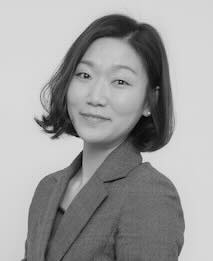
Chi Hyun Lee

Chi Hyun Lee

Principal Investigator · Yonsei University

I am an Associate Professor in the Department of Applied Statistics and Data Science at Yonsei University. My research focuses on developing statistical methodology for complex survival and event-time data, often motivated by challenges arising in biomedical and public health studies. Areas of application include cancer, cardiovascular disease, Alzheimer’s disease, and child maltreatment.

Students work across methodological development, simulation, computation, and substantive applications, with projects designed to grow in depth as their training develops.

Jaeyoung Shin

PhD student

Conformal inference for survival prediction.

Gwonseop Lim

MS student

Gene-panel selection and optimization.

Ingyu Ham

MS student

Mediation analysis for survival outcomes.

Jehoon Jeon

MS student

Conformal inference for survival prediction.

Seula Chung

MS student

Regression with right-censored covariates.

Chaewon Park

MS student

Deep Gaussian-process survival modeling.

Youngchan Jeon

BS student

Policy effects for recurrent events.

You?

Open position

PhD · MS · undergraduate research opportunities.

Alumni

Jina Kim

Sollip Jeong

Support & collaboration

Research support and partners

External and institutional support enables methodological research, student training, and collaborative work across biomedical and social-science applications.

External

Development of a Conformal-Based Predictive Uncertainty Quantification Framework for Survival Data

NRF · [PI]

[2026.03–2031.02]

External

Development of a Multi-QC Platform and QC Infrastructure Support System

MOTIR · [Collaborator]

[2026.01–2028.12]

Institutional

Policy in Practice: Evaluating the Effectiveness of Mandated Reporter Training on Child Protective Services Accuracy

Internal Research Grant for Humanities and Social Sciences

[2025.10–2028.03]

Institutional

Development of Statistical Methods for Evaluating the Impact of Recurrent Cardiovascular Events on Breast Cancer Survival

Future Research Initiative

[2024.11–2027.10]

Collaborators & coauthors

Y-TEM works with colleagues at medical centers and universities in Korea and the United States.

MD Anderson Cancer Center UC San Francisco UNC Charlotte University of Memphis UMass Amherst Korea University KAIST

Publications

Selected papers

In preparation

This section is being updated.

Recent methodological submissions and arXiv preprints from Y-TEM will be added here as they become publicly available.

Software & tools

Research software

Coming soon

This section is being updated.

Software, reproducible code, and research tools developed or maintained by Y-TEM will be linked here as they are released.